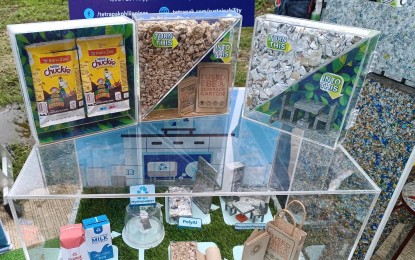
RECYCLED MATERIALS. Used beverage cartons (UBCs) are turned into new and valuable materials, such as chairs, tables, mobile phone holders, board games, and other usable items. The municipal government of Cuenca, Batangas is conducting the "Cartons for Communities: Sorters Support Program" to create livelihood while cleaning up the town. (Photo by Cuenca MENRO)
Agritech | via PNA | Batangas town begins recycling, livelihood project | Through the Municipal Environment and Natural Resources Office (MENRO), the local government unit (LGU) of Cuenca has started a program to turn used beverage boxes (UBCs) into new things that can be sold, like chairs, tables, cell phone holders, board games, and other useful things.
The “Cartons for Communities: Sorters Support Program” is a joint effort with Tetra Pack, which is said to be the world’s top company for food processing and packaging solutions.
In an interview on Friday, Jannzar Philip Aala, the head of Cuenca MENRO, said that this project is the first of its kind in Batangas province and was made possible because the mayor is eager to solve the town’s problem with solid waste management.
Mayor Alex Magpantay, Catherine Chua, who is in charge of sustainability at Tetra Pak, and Sheila Gomez, who works for GNS Enterprises, helped start the project.
Aala said, “The main idea of this project is to let people know that UBCs are recyclable items. This helps a lot to cut down on our leftover trash.”
In addition to helping the earth, the project aims to help “community sorters” make more money for their families.
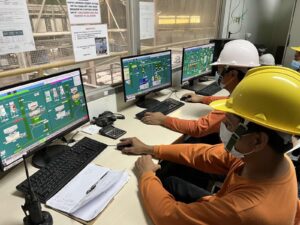
The sorters at the Central Material Recovery Facility Ground in Barangay Dalipit East were given 16 sets of safety gear from Tetra Pak to protect their health.
It was said that these sorters have to dig through trash to find things that can be recovered.
For all their hard work, the sorters can buy about 1 kg of food for every 300 kg of UBC they can gather.
Aala said, “This program is our answer to the call from the national government to implement RA 9003, or the Ecological Solid Waste Management Act of 2000.”
He also said that the project fits with the Department of Environment and Natural Resources’ 10-year plans for local governments on how to deal with solid trash.
With this plan, the amount of residual trash that needs to be picked up, especially UBCs that are dumped in the municipal sanitary landfill, will go down.
This is also a creative way to increase the amount of trash that doesn’t end up in landfills and to use technology to help reduce the pollution caused by solid waste that isn’t separated.
“We hope that people will sort their trash and throw it away in the right way to protect and preserve the town,” Aala said.